
A Beninese project for the languages of Benin
Teaching machines to understand our languages.
J’aime Ma Langue gives a voice to the languages of Benin and opens the doors of the digital world to those who are still far from it. Together with local communities, the project collects and promotes the national languages through authentic voice data, develops artificial intelligence models able to understand them and speak them back, then turns these technologies into accessible voice services. The ambition: to let everyone interact with digital services in their own language, even without being able to read or write French.

The corpus, June 2026
700 h
of Fongbe speech recorded from phones
2,507
contributors across Benin
600 h
listened to and validated by people
22
voice services built on the same models
Why this project
Digital services speak French, in writing. Many people in Benin do neither.
In Benin, only 51 % of adults can read and write. A trader who cannot read her phone screen hands it to a neighbour, with her secret code, to send 5,000 francs. For someone who does not read, the choice is to give away the code, depend on an intermediary, or give up.
Machines could not help either. Before 2025, there were only a few tens of hours of recorded Fongbe, mostly read aloud, and the best available model got one word in two wrong.
Our approach is simple: first the data, with Beninese people themselves; then the models; then the services.
Our vision
Digital services must be usable by everyone, in their own language.
In Benin, more and more public services are online. Yet for part of the population, language and the difficulty of reading or writing remain barriers. J'aime Ma Langue wants mastering written French to stop being a condition for benefiting from digital services: the voice, in one's own language, should become a simple and natural way to get information, complete a procedure and use public services.
The project is part of Benin's National Strategy for Artificial Intelligence, led by the Ministry of Digital Transformation and Innovation. It rests on a choice of digital sovereignty: building the data and the skills in Benin, keeping the power to decide, and making sure that the value created serves our people.
Our ambition: digital services that speak all the languages of Benin.
Our mission
Build, in Benin, the voice infrastructure that lets everyone use digital public services in their own language.
01 · Collect
Record the languages of Benin with the people who speak them, in natural speech, and have every recording checked by humans.
02 · Build
Train in Benin the speech recognition, speech synthesis and translation models for each language, and measure them openly.
03 · Serve
Put these models into voice services for health, agriculture, commerce, payments and public services, for people who do not read French.
04 · Share
Open data, benchmarks and methods, and train local talent, for all the languages of Benin.
From a few hours to a corpus
10 Nov 2025
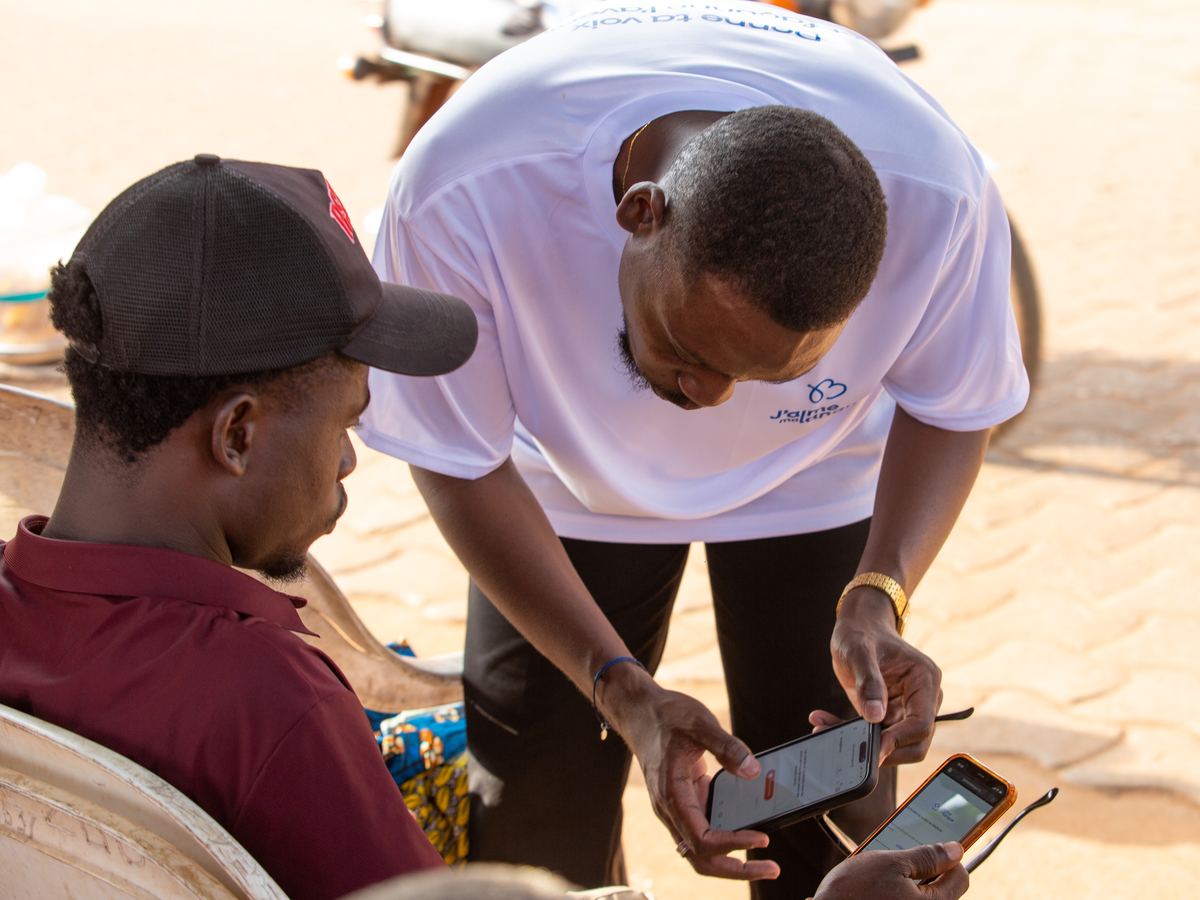
Anyone can record their voice from a phone on the collection platform.
Dec 2025
A three-day datathon takes the collection from 37 to 105 hours.
Jun 2026
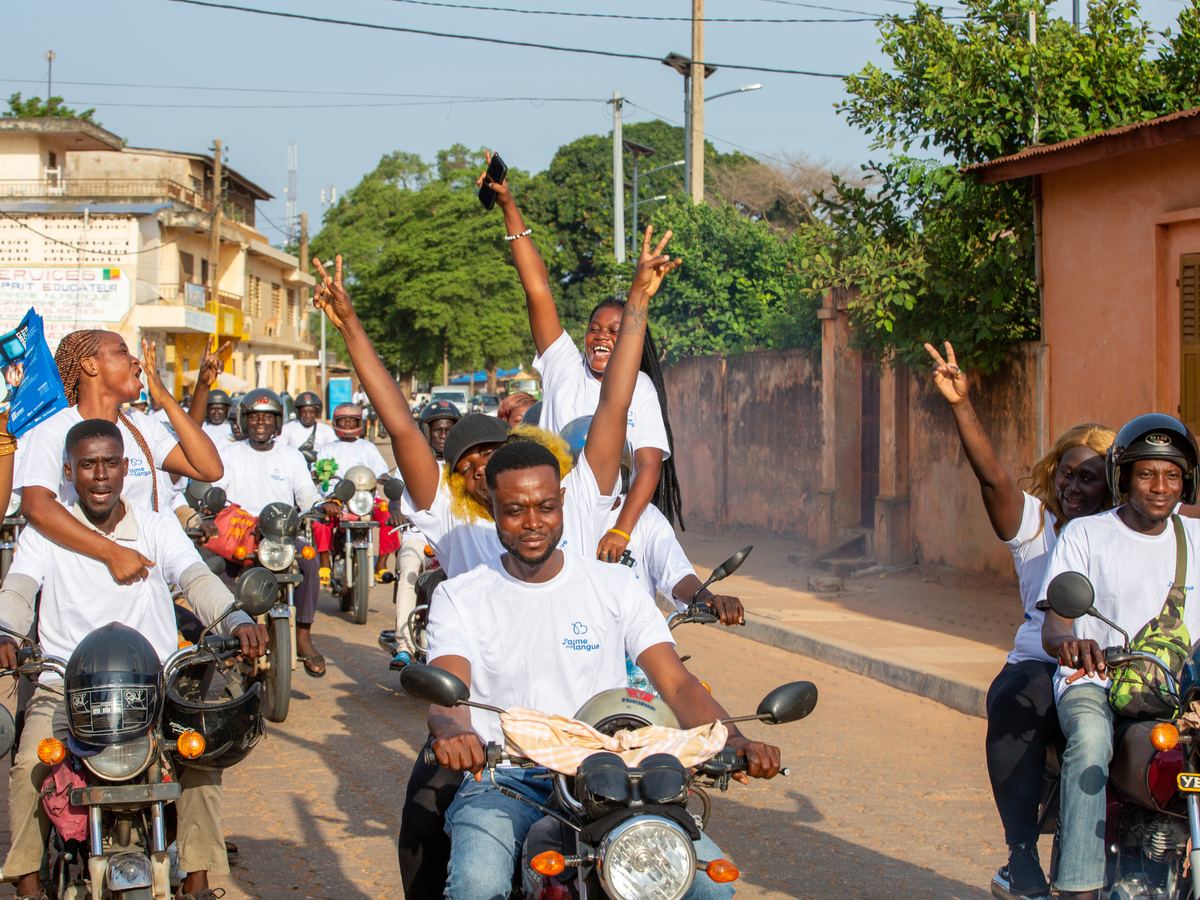
After a mission in the North, 700 hours from 2,507 contributors.
Nov 2026
Our own models recognise, translate and speak Fongbe: on a ten-word sentence, one or two errors instead of four or five.
Demos
Speak your language, and the service understands
Four examples among 22 services in health, agriculture, trade, public services and culture. All of them rest on the same models.
Trade
Sèkwè
Say who to send money to and how much. The app prepares the transfer, and you confirm without reading a figure or sharing your code.
Agriculture
AgriFon
Ask the price of maize at the Glazoué market and hear the answer in Fongbe.
Health
Pharmacie de garde
Ask where the nearest pharmacy on duty is, and follow the way on the map.
Culture
JML Traduction
Speak Fongbe and be understood in French, and the other way round.
Resources
Open tools for our languages
Do you speak a language of Benin?
Record a few sentences in your language from your phone. Women's and elders' voices are the ones we lack most.